Heat Pumps in the Houston Climate: What Changes Below 32 Degrees
A heat pump does something a furnace doesn't, it moves heat instead of making it, and that difference matters most on the handful of nights a year it actually gets cold here.
August 25, 2026 · 4 min read
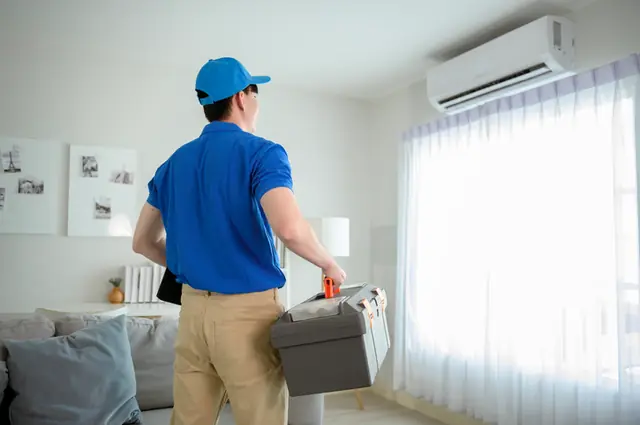
A heat pump doesn't burn anything to make heat. It moves heat that already exists, pulling warmth from the outside air, even cold outside air, and transferring it indoors, then reversing the same process in summer to cool the house instead. In a climate like the Houston area's, with a short, mild winter and a long cooling season, that's a genuinely efficient way to run a home for most of the year.
Three types, one basic idea
Heat pumps come in a few forms. An air-source system, the most common by far, exchanges heat with the outside air. A water-source system exchanges heat with a well or pond. A geothermal system exchanges heat with the ground itself, which stays at a stable temperature year-round regardless of what's happening above the surface. All three move heat rather than generate it, and all three reverse the process to cool a home in summer.
Why efficiency drops as it gets colder
An air-source heat pump's efficiency is tied directly to how much heat is available in the outside air to pull from, and that supply shrinks as the temperature drops. In most of the country, that's a real limitation. In the Houston area, with high humidity, hot weather for most of the year, and short, mild falls and winters, an air-source heat pump spends the overwhelming majority of the year in conditions it's genuinely efficient in. The exception is the handful of nights that dip toward or below freezing, when the system has less outside heat to work with and has to lean harder to keep up.
What happens on those cold nights
Most heat pump systems handle this with backup electric resistance heat that supplements the heat pump automatically when the outdoor temperature drops low enough. It's a normal, designed-in part of how the system works, not a malfunction, and it's specifically why a heat pump doesn't leave a Houston-area home cold on a rare hard freeze. It does mean those particular nights cost more to heat than a typical 45-degree evening, which is worth knowing rather than being surprised by on a winter bill.
Why heat pumps make sense here specifically
A furnace has to be sized for the coldest night of the year, every year, even in a climate where that night might happen twice. A heat pump handling both heating and cooling in one system is often a better match for a place where cooling is the dominant job for eight or nine months and heating is a mild, short-season need the rest of the time. That's a large part of why heat pumps show up so often in new installations and replacements across this part of Texas.
Sizing still has to match the house
- Square footage and ceiling height, not just the size of the previous system
- Window count, orientation, and how much direct summer sun the home gets
- Ductwork condition, since a heat pump connected to leaky or undersized ducts loses efficiency the same way any system does
- Whether the home would benefit from zoning rather than one thermostat for the whole house
- The realistic winter low for this specific location, not a generic statewide number
Getting the sizing right is where the value actually is
An undersized heat pump runs constantly and leans on backup heat more than it should. An oversized one short cycles and never runs long enough to dehumidify properly in summer, which matters as much here as the heating side does. Getting the sizing right the first time is most of what separates a heat pump that performs well for its full lifespan from one that never quite feels right in either season.
A heat pump still needs the same seasonal attention
Because a heat pump runs year-round, doing the cooling job in summer and the heating job in the cooler months, it accumulates wear on both sides of that cycle rather than sitting idle half the year the way a straight AC-and-furnace setup does. A twice-yearly check, once before the cooling season and once before the handful of cold nights arrive, covers refrigerant charge, electrical connections, and the outdoor coil the same way it would on a standard AC system. The filter still needs regular changes too, since a heat pump moves air through the same ductwork a conventional system would, and restricted airflow costs it efficiency on both the heating and cooling side.
Prestige Heating and Air Conditioning provides a free quote on heat pump installation and services all brands of equipment across Magnolia, The Woodlands, and Conroe. Financing is available for new installations. Call (281) 288-6211 to talk through what would actually fit your home.
Prestige Heating and Air Conditioning. (281) 288-6211
Call (281) 288-6211More articles
Why Your AC Cools Fine in June and Struggles by August
The thermostat says the same number all summer. The system behind it is working a lot harder to hit it in August than it was in June.
What Actually Fails on Your Outdoor Condenser
The unit outside your house does more moving and more heat cycling than almost anything else on the property, and it shows.